Coming soon Charging-park operations ship shortly after launch. Here's a preview of what's coming.

For charging-park operators

Charging-park software that scales with you.

The POWR CPMS (Charge Point Management System) controls, monitors and bills charging parks vendor-agnostically over OCPP, from single AC points to HPC sites. Load management, roaming connectivity and automated billing all run in one backend, with no lock-in to a hardware manufacturer.

Last updated: 14 July 2026
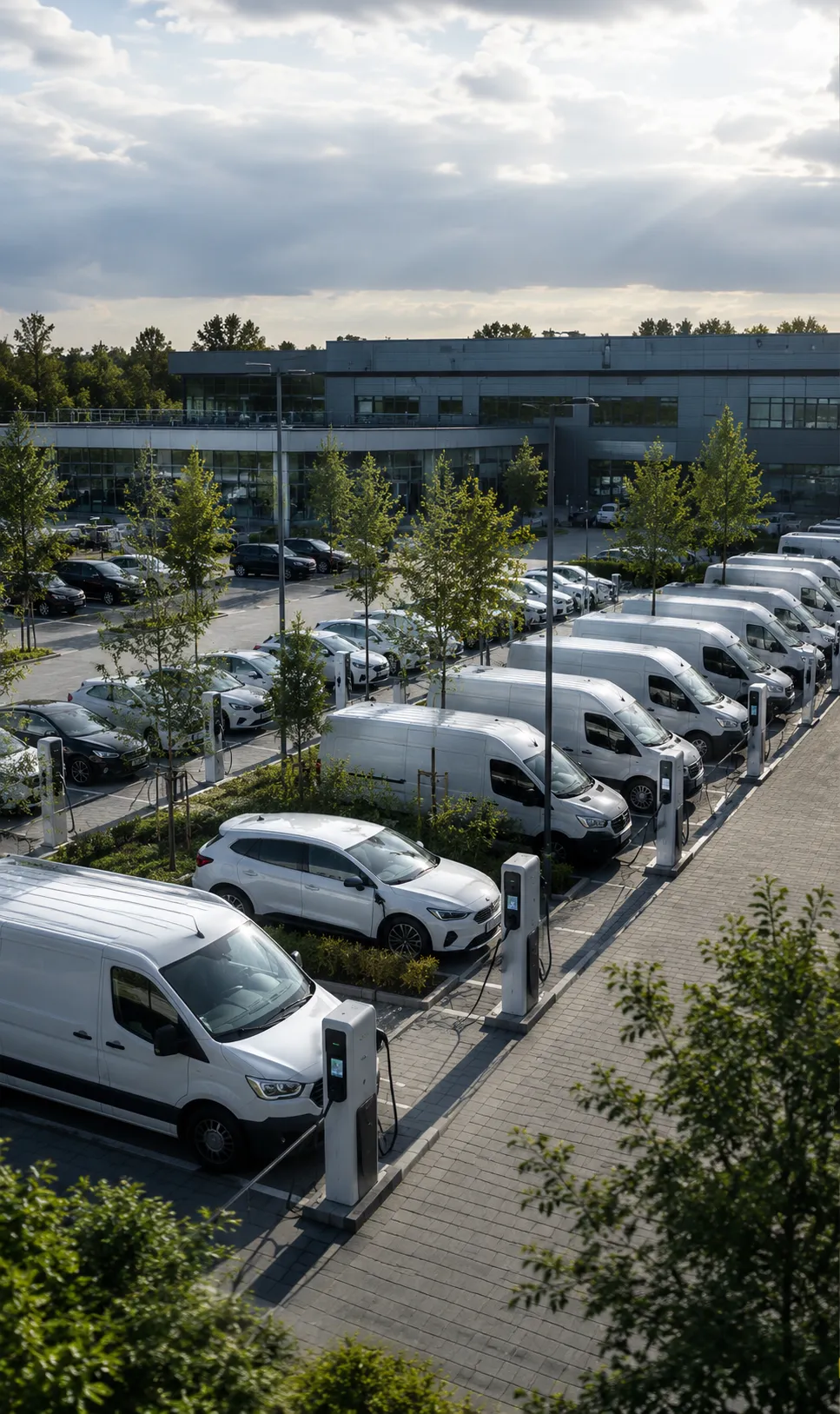
Aerial view of a charging park: fleet vehicles and vans charging at charging points in front of the company building.
OCPP 1.6 / 2.0.1
Vendor-agnostic protocol
400 kW+
From AC to HPC
1 backend
Control, bill and roam

What is a CPMS (Charge Point Management System)?

A CPMS (Charge Point Management System) is the software charging-park operators use to centrally monitor, control, authorise and bill their charging points. The POWR CPMS connects charging hardware vendor-agnostically over OCPP and combines operation, load management, roaming and billing in one backend.

What the POWR CPMS does

One backend for the whole operation: monitor charging points, manage tariffs, bill charging sessions and catch faults early.

Real-time monitoring

Status, utilisation and faults across every charging point at a glance, with alerts when something goes offline.

Tariffs and access

Set your own tariffs per site or user group and grant access by card or QR code.

Automated billing

Consumption-accurate billing per session, with audit-proof receipts and an export for accounting.

Scales with the site

From a single charging point to a multi-site HPC park, all in one administration.

How does your charging park stay vendor-open?

POWR speaks OCPP and connects hardware from different manufacturers. You keep the choice of which charging stations to build and extend your park with.

  • OCPP 1.6 and 2.0.1

    Connectivity over the common OCPP versions, so existing and new hardware run in the same backend.

  • No vendor lock-in

    Mix AC and DC hardware from different suppliers; changing manufacturer does not force you to change software.

  • Extend without disruption

    Add new charging points without interrupting the operation of the existing ones.

From fast-charging park to underground garage.

POWR operates charging infrastructure at every type of site: DC and HPC columns in the charging park, around the clock, as well as wallboxes in car parks and underground garages.

HPC charging columns with blue LED lighting at night in a charging park.
HPC columns charge around the clock while load management protects the grid connection.
An underground garage with wallboxes and green-marked EV parking bays.
Below ground too: wallboxes at marked EV bays in the underground garage.

How does load management work with a limited grid connection?

Where the grid connection is limited, POWR distributes the available power dynamically across active sessions instead of switching individual points off.

Dynamic load balancing

Available connection power is continuously shared across all charging vehicles so the connection is never overloaded.

Protect the grid connection

Configured limits are respected, so costly peak loads and overloads are avoided.

Set priorities

Sites and user groups can be prioritised, for example company cars ahead of guest charging.

Billing and roaming

The same platform also issues the POWR roaming card and handles billing for employee and company-car charging. Operation, roaming and billing come together in one place instead of across separate point solutions.

Roaming connectivity

Open your park to roaming users and turn spare capacity into revenue without extra contracts.

POWR card from one source

The same platform issues the POWR card for charging across Europe, with no separate eMSP contract.

Employee and company-car charging

Charging at the workplace and at the home wallbox is billed by actual consumption and audit-proof.

Pricing

POWR is transparently priced and billed backend-authoritatively. You see the tariff per charging point up front, with no hidden items.

View pricing

Frequently asked questions

Which OCPP versions are supported?
POWR connects charging hardware over OCPP 1.6 and OCPP 2.0.1. Existing and new devices run in the same backend, without you having to commit to a single manufacturer.
Am I locked in to a hardware manufacturer?
No. Because POWR is vendor-agnostic over OCPP, you can mix AC and DC stations from different suppliers and extend the park without changing software.
How does roaming work?
The same platform that operates your park also issues the POWR card and connects roaming networks. You open your park to external users and turn spare capacity into revenue without additional contracts.
What does a charging point cost?
Pricing depends on the number and type of charging points and is transparently itemised. Billing is backend-authoritative; the applicable tariffs are shown in the pricing overview.
Does load management work with a limited grid connection?
Yes. POWR distributes the available connection power dynamically across active sessions and respects configured limits, so the grid connection is not overloaded and costly peak loads are avoided.
Does POWR also support 400 kW chargers and megawatt charging (MCS) for trucks?
For POWR, charging power is an attribute of the charging point, not a limit of the platform: 400 kW HPC columns are connected, operated and billed like any other OCPP station. With the Megawatt Charging System (MCS) for trucks, the vehicle and the charger communicate via ISO 15118-20, while OCPP remains the standard between the charger and the backend. What matters for connecting to POWR is therefore the hardware's OCPP interface, not its power level. The supported feature set depends on the hardware and the OCPP version.

Related to charging parks

Ready to operate your charging park.

Get to know the POWR CPMS and start vendor-agnostically with OCPP, load management and billing in one backend.